The Durability Economy
Workforce Redesign, Fair Chance Hiring, and Household Stability.
For Leaders Who Measure What Lasts.
Sentenced to Prison
(During my Second Incarceration)
the Architecture
Featured Insight
From Policy Theater to Operating Results
The Fair Chance Paradox: From Policy Theater to Operating Results
The workforce system measures placements. Employers measure retention. Funders measure grant cycles. None of them measure household stability — and that's why outcomes haven't changed in 20 years. This piece names the blind spot and gives you the numbers to fix it.
Read the ArticleExplore by Topic
Fair Chance Hiring
The business case, the retention data, and the infrastructure that makes inclusive hiring sustainable — not just symbolic.
Workforce Architecture
Systems design for coordinated career pathways — connecting employers, training, support services, and retention infrastructure.
2Gen Economy
The household-centered model that invests in two generations simultaneously — parent careers and child development, aligned.
Policy and Metrics
What we measure determines what we get. Analysis of the incentive structures, funding models, and measurement systems that shape outcomes.
Reinvention and Lived Experience
The personal, the systemic, and the structural — why reinvention is a better frame than reentry.
The Ideas That Run Through Everything
We Measure the Wrong Thing
Workforce systems optimize for placements. Funders optimize for grant cycles. Corrections optimizes for compliance.
None of them optimize for household stability.
When the metric is wrong, the outcome is predictable. Change the metrics. Change the outcomes.
Household Stability Is the Real Unit of Change
You cannot stabilize a worker without stabilizing their family.
A parent navigating housing instability, child care gaps, and benefit cliffs is not a retention problem. They are a systems-design problem.
The household is the unit. Everything else is a workaround.
Hiring Is the Beginning, Not the Finish Line
The system celebrates placement. The worker needs advancement.
Fair chance hiring without retention infrastructure is a revolving door with better PR. Wage progression, manager support, and career pathways — that is the finish line.
A job is not freedom. A career is closer.
Systems Must Be Designed for Measurable Outcomes
Good intentions are not a substitute for good design.
If a program cannot articulate its outcomes at 12 months — with numbers, not narratives — it is not ready to scale. It may not be ready to fund.
Design for durability. Measure for accountability. Fund what works.
The ROI of Fair Chance Hiring: A Data Snapshot
Hard numbers and practical proof. The retention data, the tax credit math, and the business case — in one document.
- Retention comparison: fair chance hires vs. general population
- WOTC tax credit calculation framework
- Cost-of-exclusion model for employers
- Three implementation steps you can start this quarter
Essays and analysis on household stability, fair chance hiring, and the metrics that decide whether placements last. Written for the leaders who run workforce boards, employers, funders, corrections agencies, and the programs that serve justice-impacted families.
From Insight to Implementation
The thinking on this page is the foundation. Here's where it becomes action.
Need Strategy?
Consulting engagements for employers, funders, workforce boards, and public agencies. We design systems, build playbooks, and stay through implementation.
Explore Consulting →Need a Speaker?
Keynotes, workshops, and executive briefings that challenge systems thinking and move audiences to action. Customized for your event and audience.
Explore Speaking →Need the Model?
The 2Gen Economy Blueprint — the systems-level blueprint for household-centered workforce development. The full explanation, the phases, and the tools.
Explore the Blueprint →Take the Next Step
Start the Conversation
Explore consulting engagements or start a discovery conversation to discuss your organization's workforce and systems-change goals.
Start the Conversation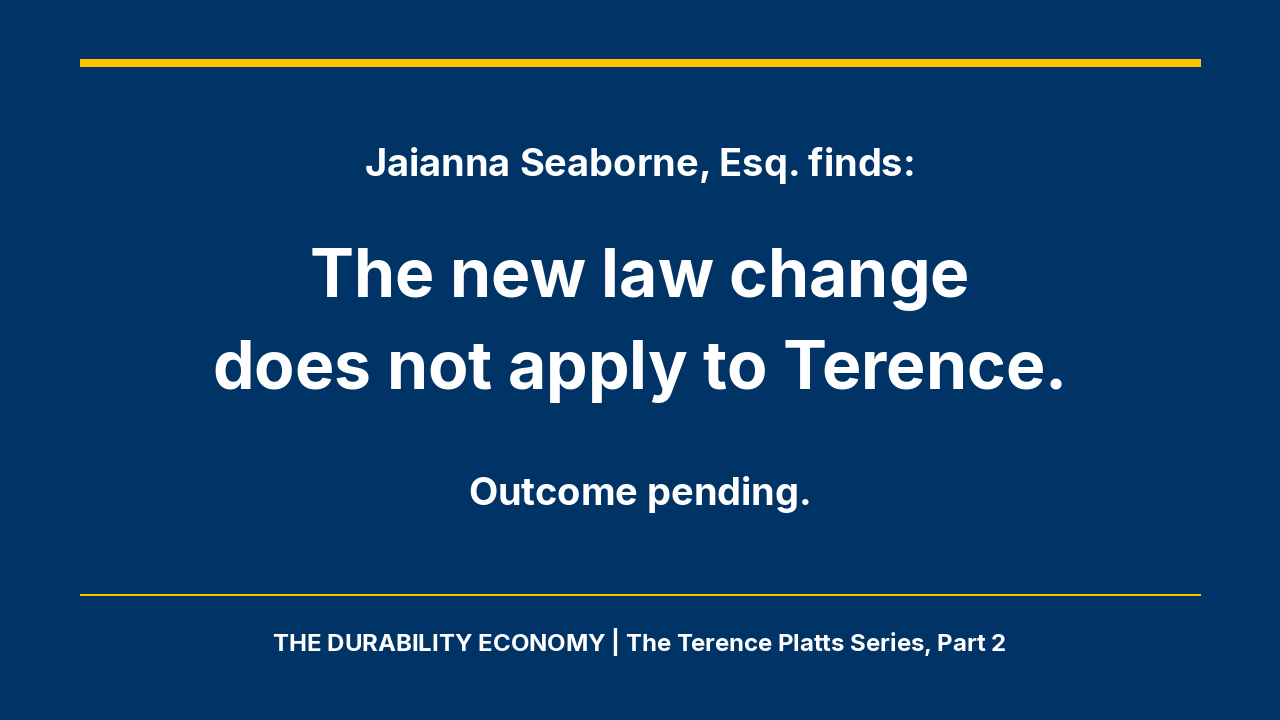
Terence Platts was told a change in the law applied to him. According to Florida attorney and NARP board member Jaianna Seaborne, Esq., her investigation found that it does not.
That is the turn in this story. It is not a report that the case has been resolved, and it is not a determination from the prosecutor's office.
As of September 28, 2026, Jaianna has contacted that office and consulted a longtime prosecutor about how to correct the issue. The outcome remains pending.
Our earlier accoun...
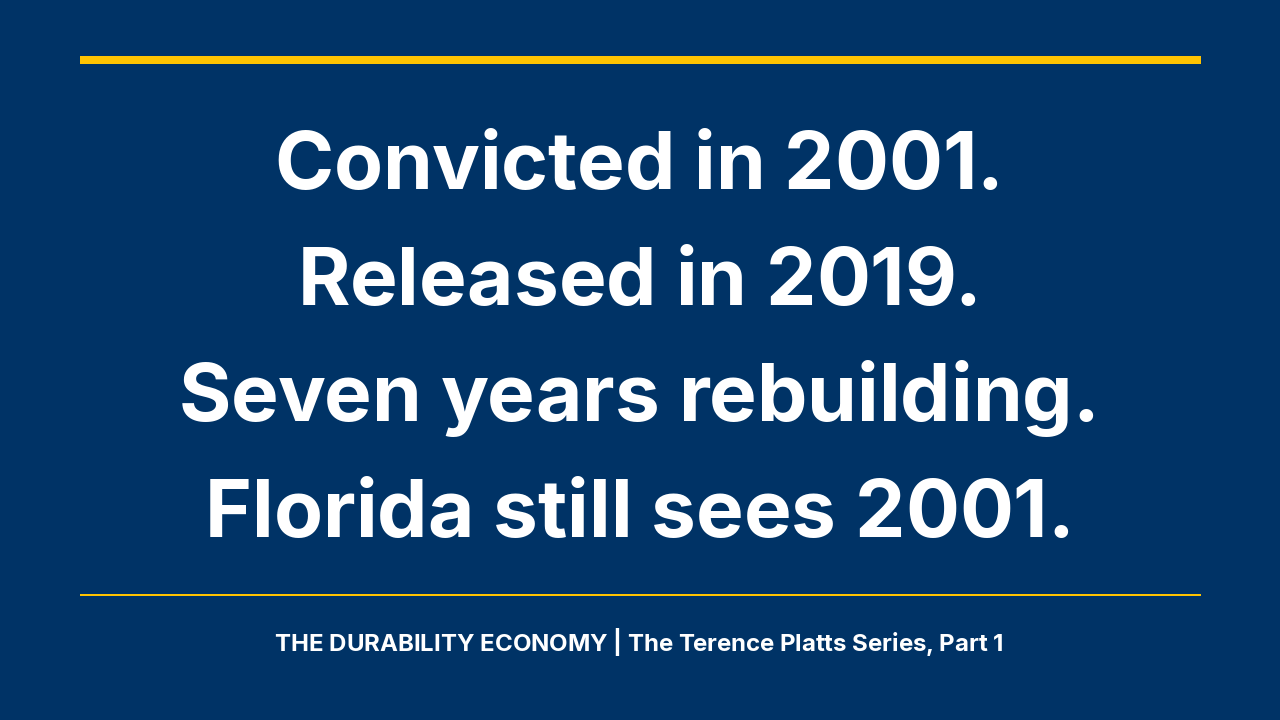
Terence Platts was convicted of attempted robbery with a deadly weapon in 2001. He served his sentence, returned home, and set about building exactly the kind of life our systems claim to want for people.
On October 1, 2026, amendments to Florida's Career Offender Registration Act take effect. They expand obligations under an existing registration system, rather than create a new lifetime requirement. Chapter 2026-151 supplies the changes.
The question is how those obligations will operate alo...
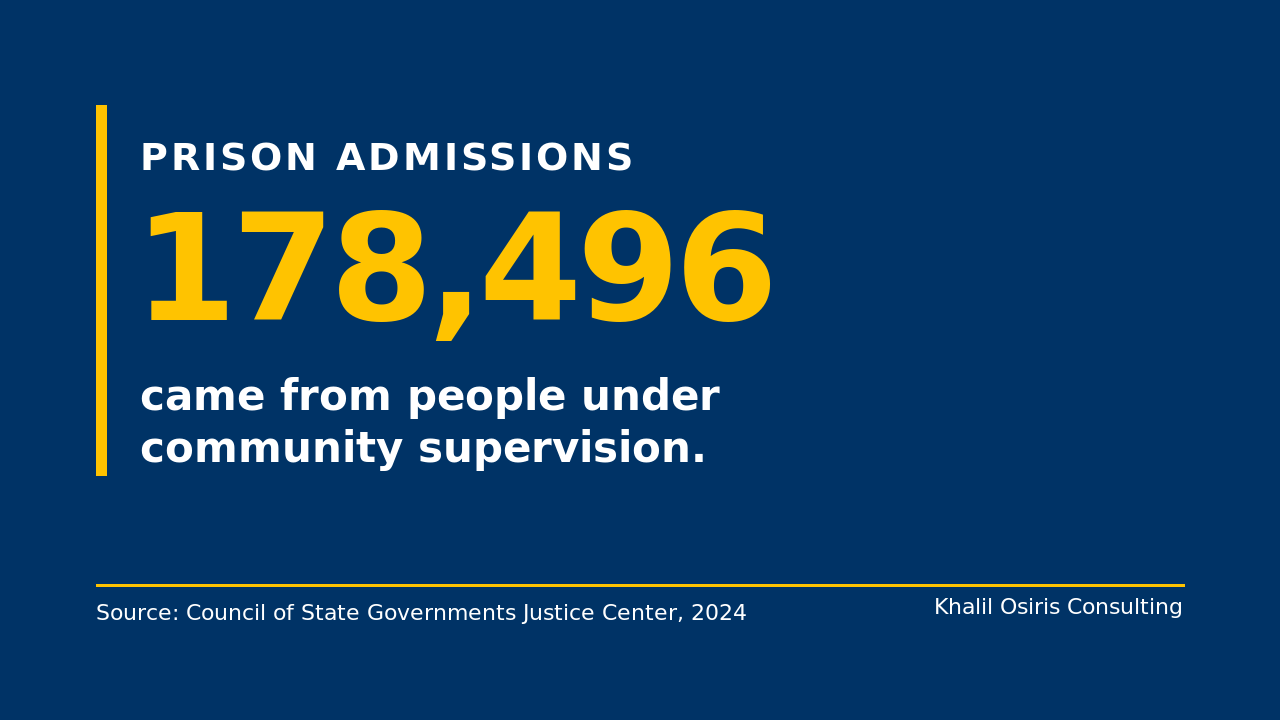
At the end of 2023, an estimated 3,772,000 adults were under community supervision in the United States. The probation population grew 1.3 percent that year while parole fell 2.9 percent, and among comparable agencies the total supervision population declined 23 percent over the decade ending in 2023. The footprint is shrinking, and no supervision agency reports what the shrinkage does for households (Bureau of Justice Statistics).
The field judges that system by compliance, completion, and rec...
The Durability Index
Free Household Stability Scorecard
Stop measuring placements. Start measuring what lasts. Score five domains across 12–24 months.
Download Free →