The Durability Economy
Workforce Redesign, Fair Chance Hiring, and Household Stability.
For Leaders Who Measure What Lasts.
Sentenced to Prison
(During my Second Incarceration)
the Architecture
Featured Insight
From Policy Theater to Operating Results
The Fair-Chance Paradox: From Policy Theater to Operating Results
The workforce system measures placements. Employers measure retention. Funders measure grant cycles. None of them measure household stability — and that's why outcomes haven't changed in 20 years. This piece names the blind spot and gives you the numbers to fix it.
Read the ArticleExplore by Topic
Fair-Chance Hiring
The business case, the retention data, and the infrastructure that makes inclusive hiring sustainable — not just symbolic.
Workforce Architecture
Systems design for coordinated career pathways — connecting employers, training, support services, and retention infrastructure.
2Gen Economy
The household-centered model that invests in two generations simultaneously — parent careers and child development, aligned.
Policy and Metrics
What we measure determines what we get. Analysis of the incentive structures, funding models, and measurement systems that shape outcomes.
Reinvention and Lived Experience
The personal, the systemic, and the structural — why reinvention is a better frame than reentry.
The Ideas That Run Through Everything
We Measure the Wrong Thing
Workforce systems optimize for placements. Funders optimize for grant cycles. Corrections optimizes for compliance.
None of them optimize for household stability.
When the metric is wrong, the outcome is predictable. Change the metrics. Change the outcomes.
Household Stability Is the Real Unit of Change
You cannot stabilize a worker without stabilizing their family.
A parent navigating housing instability, child care gaps, and benefit cliffs is not a retention problem. They are a systems-design problem.
The household is the unit. Everything else is a workaround.
Hiring Is the Beginning, Not the Finish Line
The system celebrates placement. The worker needs advancement.
Fair-chance hiring without retention infrastructure is a revolving door with better PR. Wage progression, manager support, and career pathways — that is the finish line.
A job is not freedom. A career is closer.
Systems Must Be Designed for Measurable Outcomes
Good intentions are not a substitute for good design.
If a program cannot articulate its outcomes at 12 months — with numbers, not narratives — it is not ready to scale. It may not be ready to fund.
Design for durability. Measure for accountability. Fund what works.
The ROI of Fair-Chance Hiring: A Data Snapshot
Hard numbers and practical proof. The retention data, the tax credit math, and the business case — in one document.
- Retention comparison: fair-chance hires vs. general population
- WOTC tax credit calculation framework
- Cost-of-exclusion model for employers
- Three implementation steps you can start this quarter
Start Here — For Your Role
For Employers
You're building or scaling a fair-chance hiring strategy. You need the retention data, the infrastructure framework, and the ROI case to present to leadership.
For Funders
You're investing in workforce and reinvention outcomes. You need to know what produces durability — not just activity — and how to structure funding around household stability.
For Policymakers
You shape the rules, the incentives, and the measurement systems. You need evidence that connects policy design to real-world outcomes — with clear metrics and implementation pathways.
For Workforce and Reinvention Leaders
You run the programs. You coordinate the services. You see the gaps every day. You need frameworks that work at the systems level — not just the program level.
From Insight to Implementation
The thinking on this page is the foundation. Here's where it becomes action.
Need Strategy?
Consulting engagements for employers, funders, workforce boards, and public agencies. We design systems, build playbooks, and stay through implementation.
Explore Consulting →Need a Speaker?
Keynotes, workshops, and executive briefings that challenge systems thinking and move audiences to action. Customized for your event and audience.
Explore Speaking →Need the Model?
The 2Gen Economy Blueprint — the systems-level blueprint for household-centered workforce development. The full explanation, the phases, and the tools.
Explore the Blueprint →Take the Next Step
Start the Conversation
Explore consulting engagements or start a discovery conversation to discuss your organization's workforce and systems-change goals.
Start the Conversation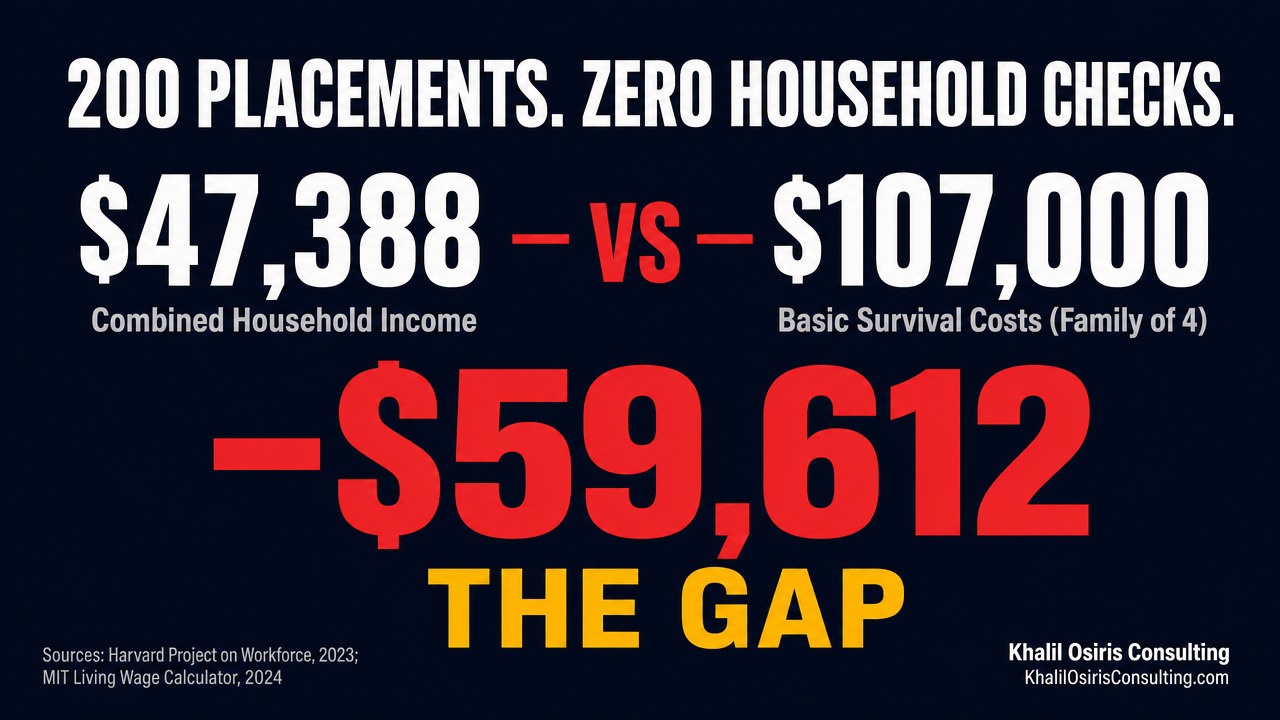
Your workforce program placed 200 people last year and never checked whether a single household survived the offer.
Here is the question nobody on your board asked: how many of those 200 workers earned enough to keep a roof over their family, child care covered, and food on the table at the same time?
Not sequentially. Simultaneously.
The answer was not in your report. The placement was the finish line. The household was never part of the equation.
And your annual report called it a success....

Most people still talk about public safety as if it begins after something goes wrong.
A crime happens. A call gets made. A case gets opened. A person gets arrested. A sentence gets imposed.
That is not where public safety begins.
That is where system response begins.
Public safety begins earlier. And closer to home.
It begins in the household.
It begins with whether rent is covered, transportation is reliable, child care holds, wages rise, and a family can absorb one disruption without fa...
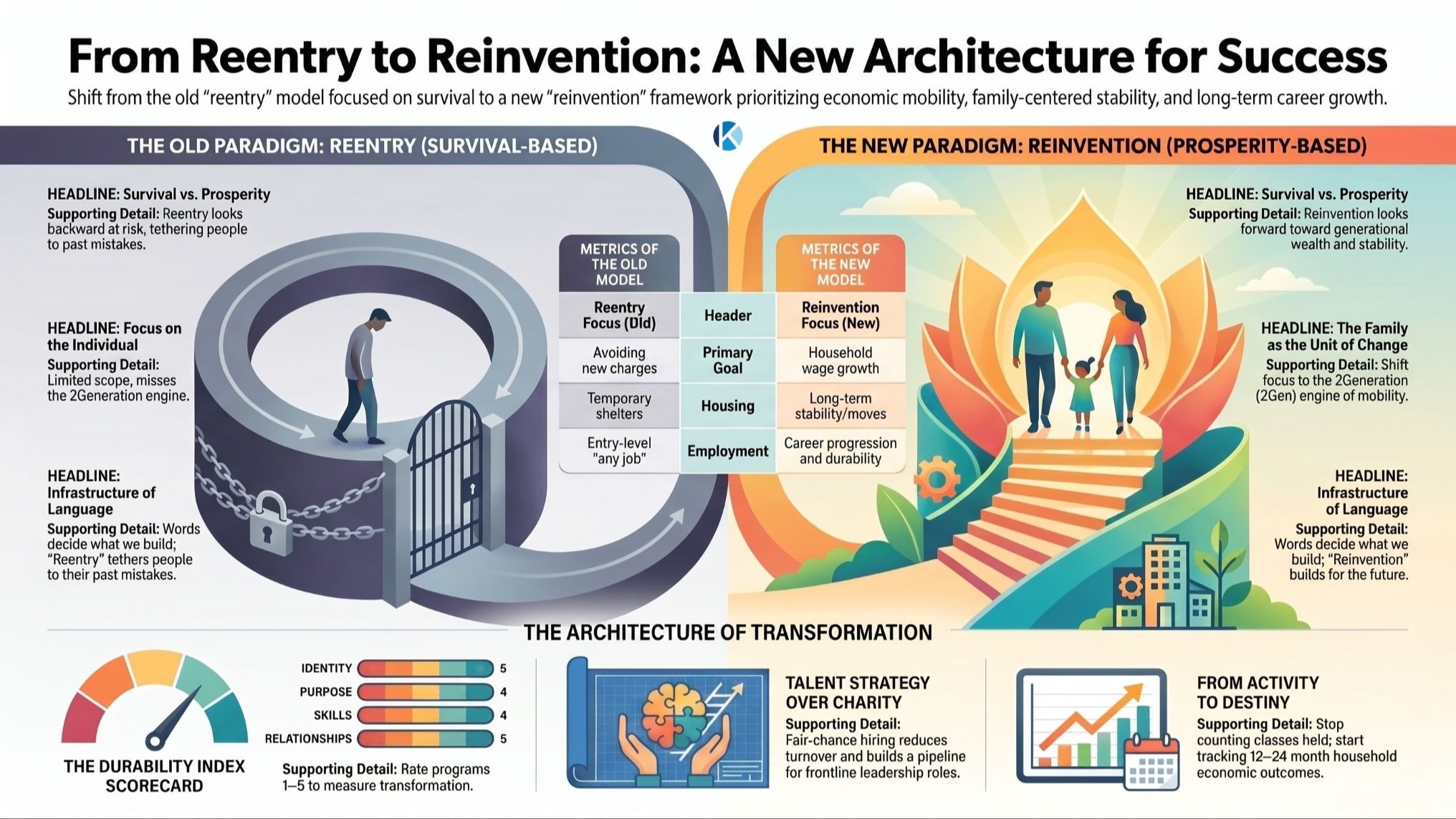
For twenty years, I lived within a system that was never meant to transform me.
It was designed to contain me.
I turned my cell into a classroom. I earned degrees from Boston University. I built the early version of what later became the Psychology of Incarceration framework.
But there was something I did not do in those twenty years.
I did not prepare to “reenter” anything.
There was nothing worth going back to. The neighborhoods had changed. The economy had shifted. The man I had become c...
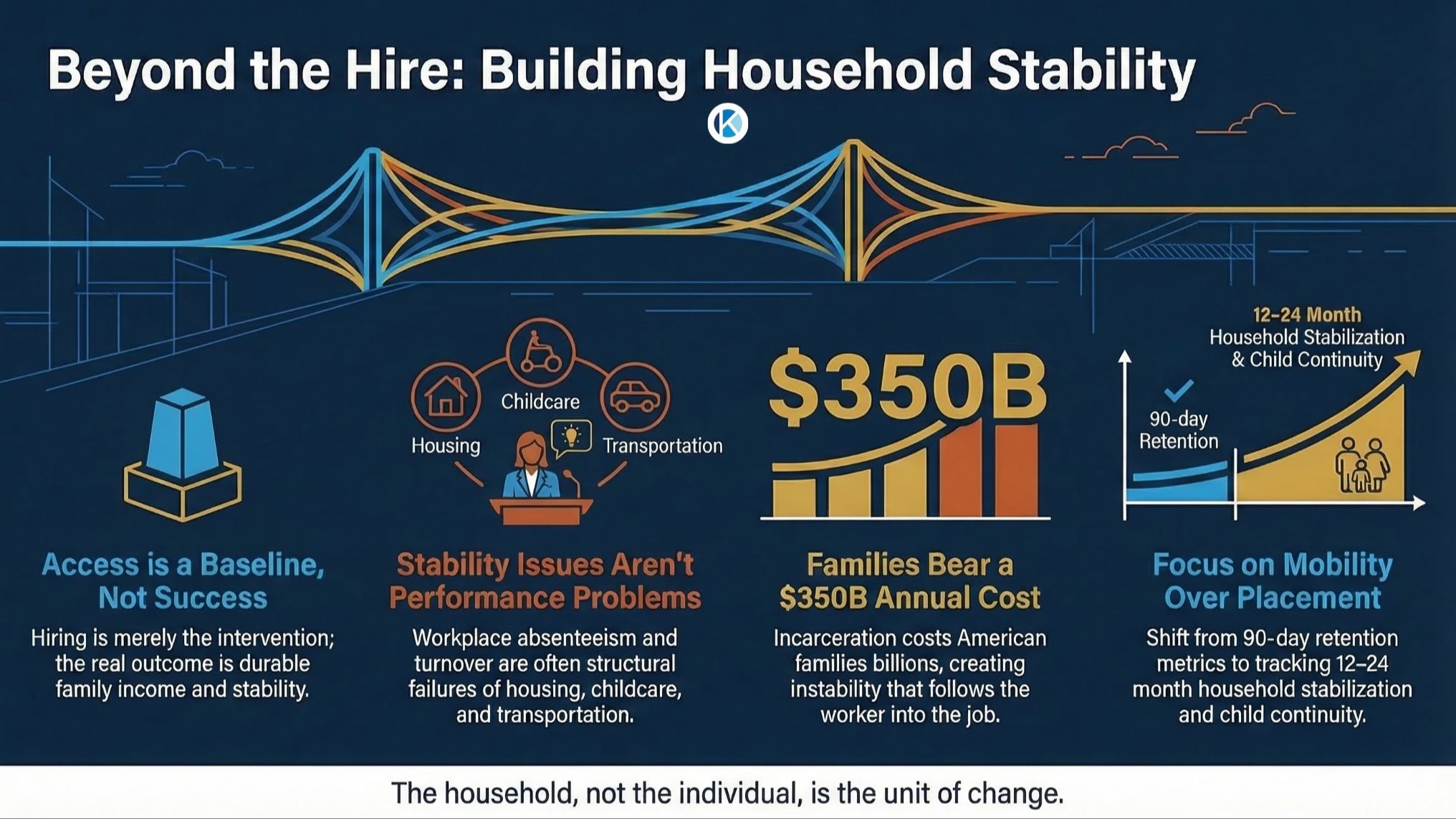
Fair-Chance Hiring has opened doors for justice-impacted workers.
But access alone does not produce household stability.
When workforce systems focus on job placement without addressing the structural barriers ; housing instability, child care gaps, benefits cliffs, and disconnected services ; that surround the worker, retention collapses and the system calls it individual failure. This article examines why the architecture behind Fair-Chance Hiring must be redesigned to stabilize households, ...
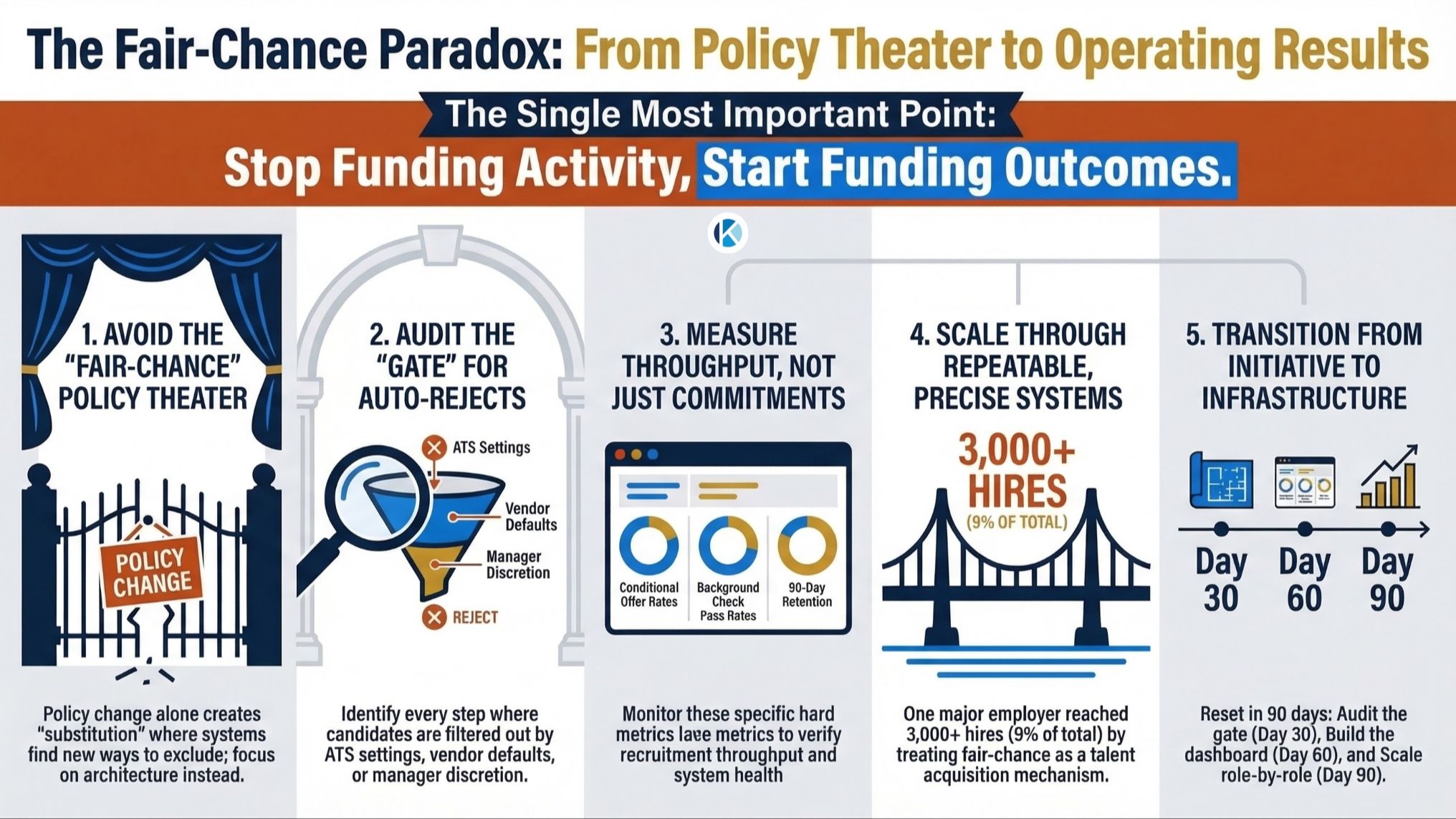
Fair-chance hiring policies have expanded across the United States.
Yet many of these reforms leave actual hiring outcomes for people with records basically unchanged.
The fair-chance paradox occurs when organizations adopt inclusive policies without building the operational infrastructure ; manager training, retention systems, and measurable outcomes ; needed to convert policy into results. This article examines why good policies alone do not produce more hires and what organizations must bui...

The Money Rarely Lines Up
You want to move people into high-wage tech jobs.
But the money rarely lines up.
Pell Grants sit on one side.
Workforce Innovation and Opportunity Act (WIOA) funds sit on the other.
I learned this the hard way. I was arrested at 16 and earned my degrees in prison. I've spent decades studying what actually works.
The program is rarely the problem.
The issue lies with the funding rules and metrics.
You can coordinate Pell and WIOA to cover eligible education costs...
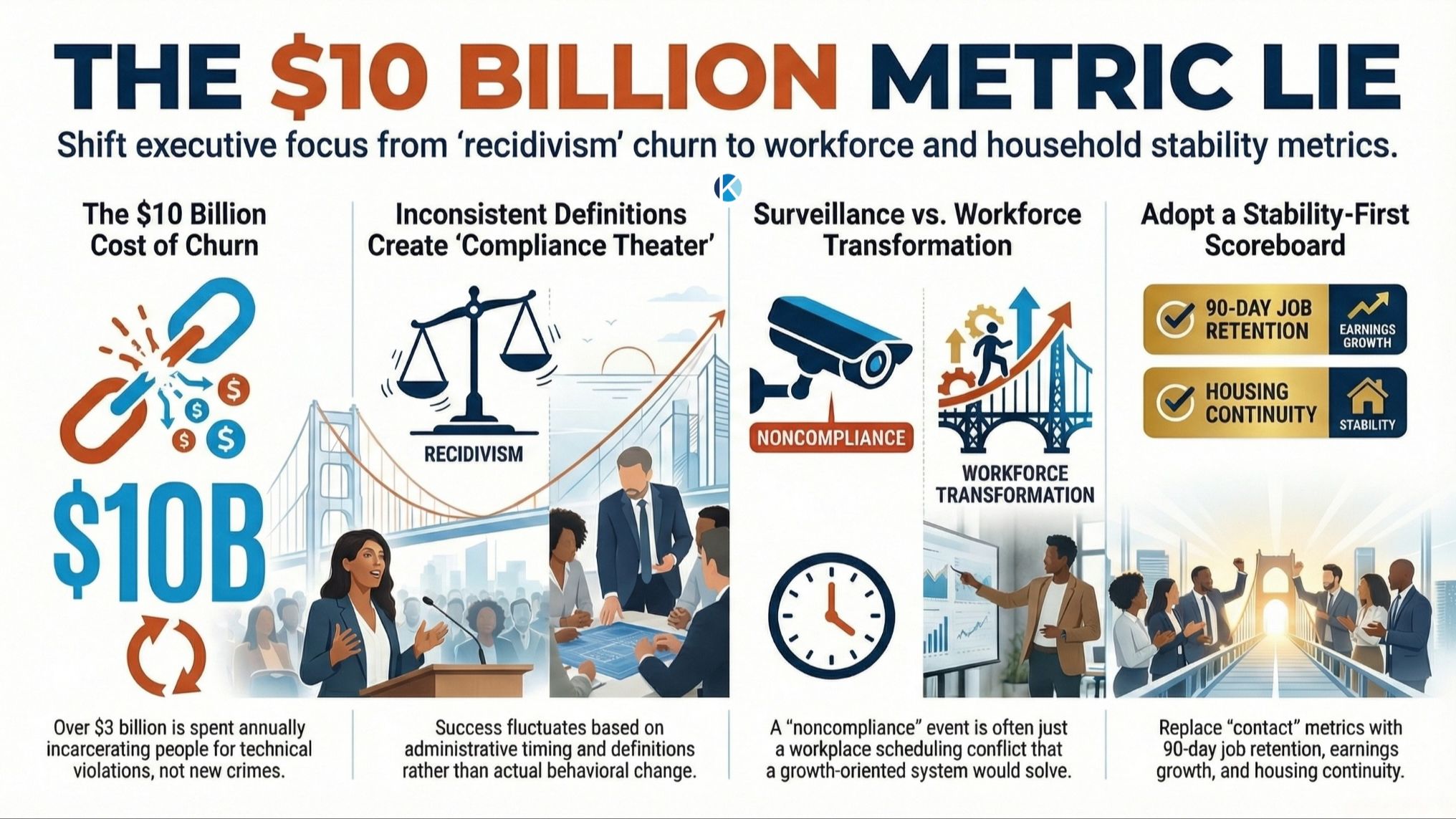
In 2023, states spent an estimated $10 billion incarcerating people for supervision violations (Council of State Governments Justice Center).
Let that number hit you.
Because it isn’t just a criminal justice problem. It’s workforce transformation. It’s economic growth. It’s social impact leadership ; grounded in lived experience as system intelligence.
We keep calling it accountability. But too often, it’s a system rewarding itself for doing more of the same.
Here’s the uncomfortable truth.
...
The 2Gen Blueprint shifts the unit of intervention from the individual to the household.
Rather than measuring success by job placements or program completions alone, the 2Gen approach tracks household stability across five domains.
Employment, housing, child care, financial resilience, and family well-being. Here are five evidence-based facts about how 2Gen metrics change outcomes for justice-impacted families and the communities they return to.
Fact 1: The Unit of Service Determines the Out...

Some of my greatest teachers were in prison.
They were veterans serving time alongside me, men who taught me pattern recognition by reading a cellblock like a battlefield.
Men who taught me threat detection by surviving in spaces designed to break you.
Men who taught me strategic thinking under pressure, because pressure was all we had.
At the time, I thought they were teaching me survival.
Today, I realize they were teaching me cybersecurity.
The hypervigilance that kept me safe in a six-...
The Durability Index
Free Household Stability Scorecard
Stop measuring placements. Start measuring what lasts. Score five domains across 12–24 months.
Download Free →